In Mike’s Words
Sometimes the most useful part of a municipal issue is the story behind it.
Here you’ll find videos & photo updates on projects, decisions and what’s happening in Radium — watch here, or follow along on Facebook for the latest videos and updates.
Here you’ll find videos & photo updates on projects, decisions and what’s happening in Radium — watch here, or follow along on Facebook for the latest videos and updates.
Accomplisehd a Lot in Four Years - October 11
OCP - October 12
Columbia Valley Housing Society - October 10
Radium's Motels - October 8
Downtown Revitalization - October 2
Ridge Road - Housing - October 6
Water Treatment - October 3
Share this Webpage with Others
Forestry & Canfor in Radium
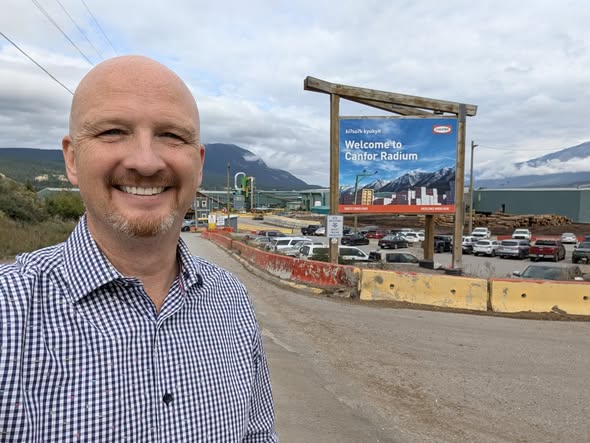
Forestry can sound like a very big, abstract industry until you live in a place where the mill is just down the road. In Radium, it isn’t abstract at all. The Canfor mill means people going to work every day, families living in the Columbia Valley, local contractors and suppliers, and an industrial tax base that communities our size don’t often have. The relationship between forestry and Radium is an important part of what helps our community function. We’ve watched other B.C. communities deal with mill closures, and we know how significant those losses can be for workers, families and entire local economies. Canfor itself has closed several B.C. operations in recent years as the sector has dealt with fibre availability, weak markets, tariffs and other pressures. That makes it especially important for us to stay connected. At UBCM this year, I joined other Kootenay local government representatives for a regional meeting with Canfor’s corporate team. We talked about the challenges and opportunities facing forestry in our communities, and about what those larger industry decisions mean when they reach places like Radium. We also continue to work with the people right here at the Radium mill, with Canfor’s Kootenay team, and with the broader company. Those relationships matter. Local government cannot solve the challenges facing the forestry sector on its own. What we can do is understand what one of our major employers is facing, keep the conversation open, make sure local impacts are understood, and raise those issues with the people who make provincial policy. Sometimes practical advocacy looks like that. There isn’t always an announcement at the end of the meeting. Sometimes the value is making sure the people making decisions understand what those decisions look like when they arrive in a community like Radium.
Columbia River Access Park
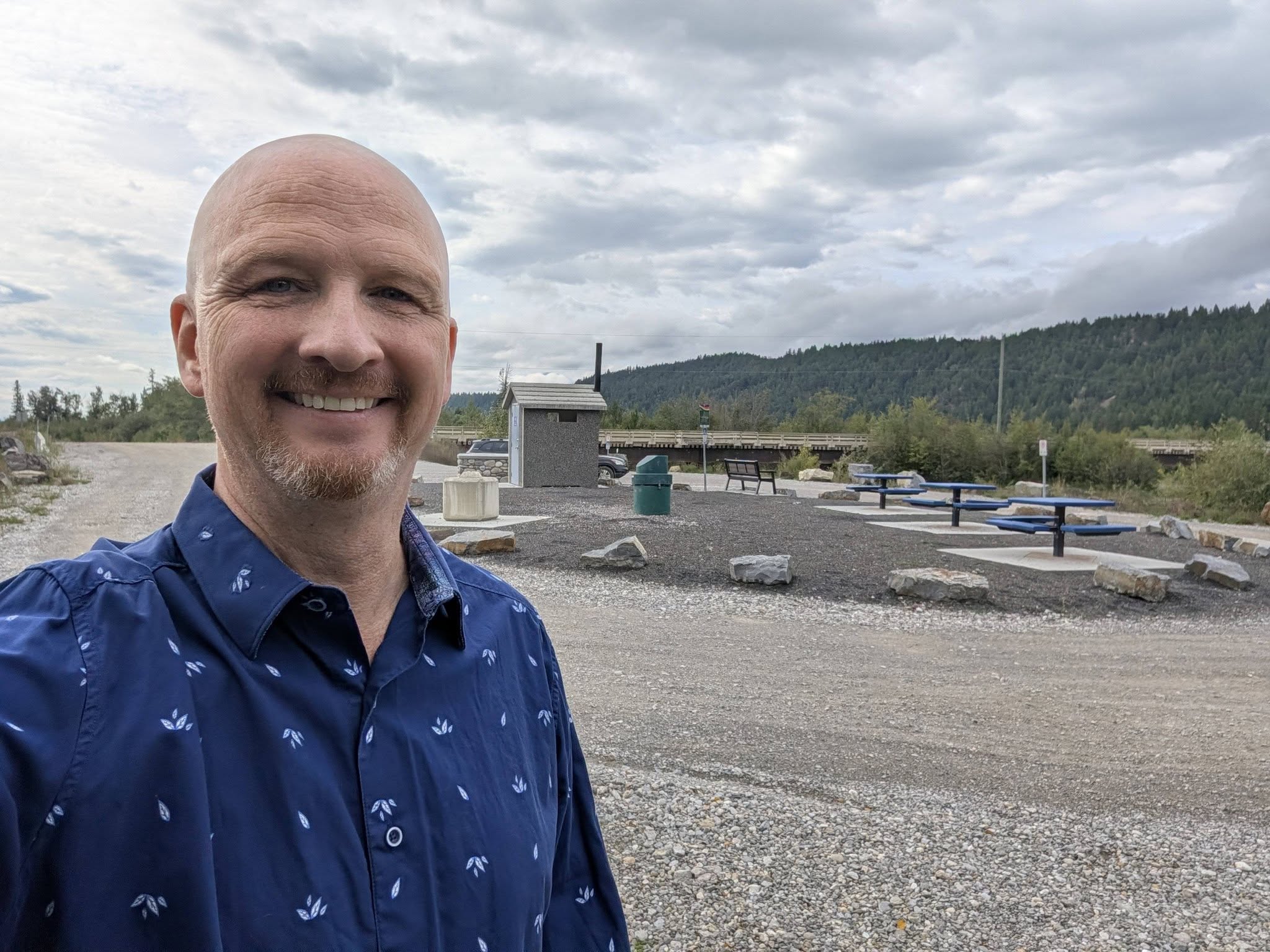
Sometimes the best municipal projects start with someone seeing an opportunity and connecting the right people. Years ago, the place we now know as the Columbia River Access Park was an informal river access that wasn’t working particularly well. People were using it, but the site was being damaged, garbage was being left behind, and access to the river wasn’t well organized. Clara Reinhardt, who was Mayor at the time, made the connection with Schickedanz West, a major land developer in Village of Radium Hot Springs. That relationship helped open the door to a land donation, and Council was able to pair that opportunity with Resort Municipality Initiative funding to build something much better. What came out of it was organized parking, a washroom, picnic space, garbage facilities, safer river access and better protection for the surrounding wetlands. The Columbia River wetlands are ecologically sensitive, so if thousands of residents and visitors are going to enjoy them every year, we also have a responsibility to make sure that recreation happens in a way that minimizes the impact. I was a Councillor then, and projects like this taught me a lot about how good local government actually works. It usually isn’t one person standing up with a brilliant idea. It is somebody spotting an opportunity, somebody knowing which partner to call, somebody understanding what funding is available, staff figuring out the practical details, and a Council willing to put the pieces together. That is still how I think about municipal problem solving today. Sometimes the job is not to invent the answer. It is to recognize the opportunity in front of you and bring the right people together to make something useful out of it.
Sinclair Creek Trails
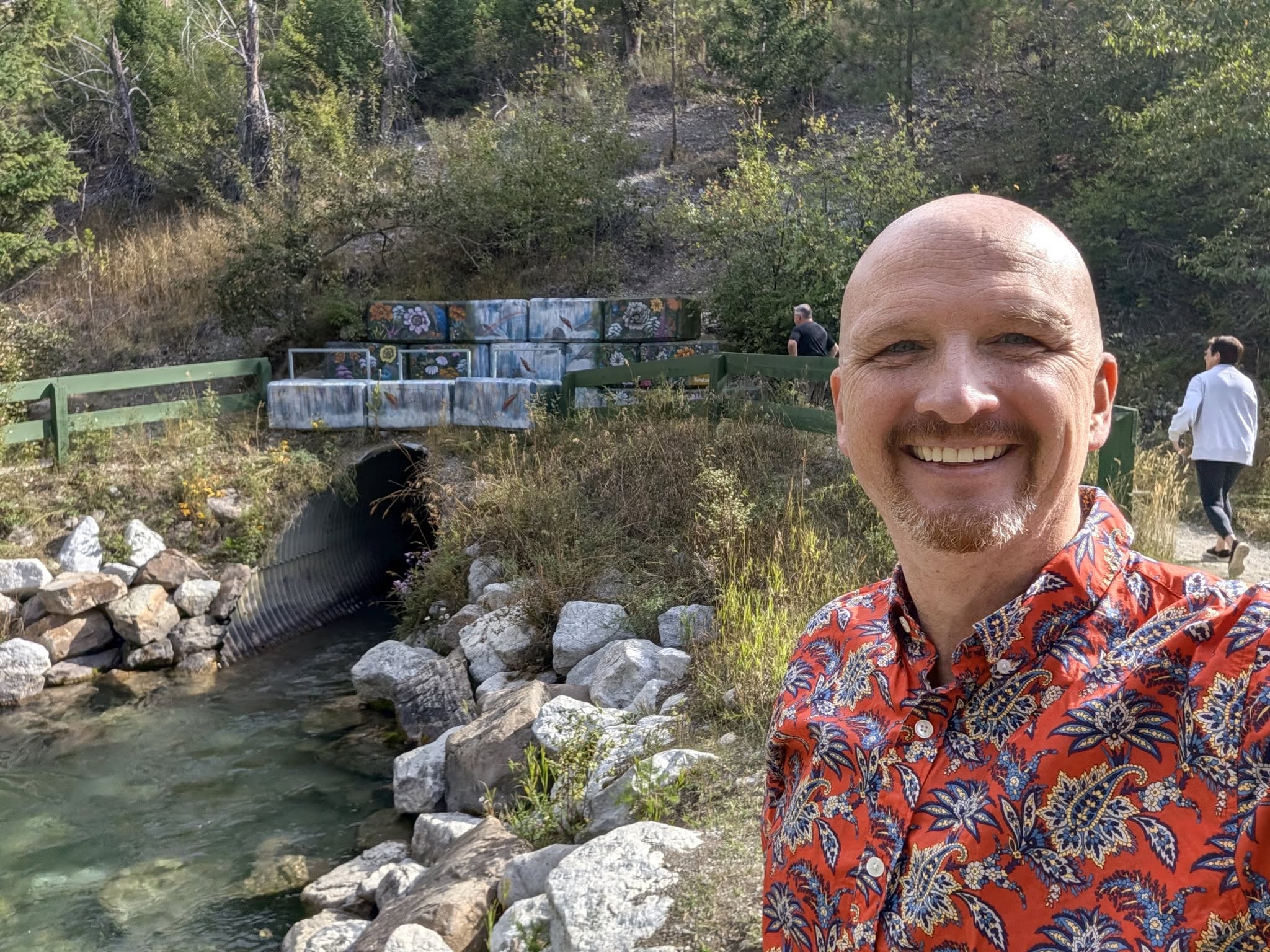
I’ve walked my dogs through Sinclair Creek more times than I could possibly count. It is also one of the places I like to take visitors when I want to show them a side of Radium they might otherwise miss. The beauty of the trail system makes it an incredible amenity for residents and visitors alike. And what I like about Sinclair Creek is that no single feature is really the whole story. There are trails, bridges, the dog park and off-leash areas, disc golf, the pump and jump track, picnic spots, public art and places to just stop beside the creek. Over time, the Village has also worked to improve connections into the trail system from different parts of the community. None of those things by itself is some enormous municipal project. Together, they create a recreation network that gives people a surprising number of ways to enjoy the same part of Radium. Small communities can do this particularly well. Keep adding useful pieces. Work with volunteers and community groups. Use outside funding when opportunities arise. Improve connectivity. Let the pieces start working together. Sinclair Creek has grown that way for years. And I still love walking my dogs there.
Radium's Digital Signage
One of the most common things you hear in local government is, “I didn’t know about that.” Sometimes the information was shared. The challenge is that people get their information in completely different ways. Communication has been a real priority for us this term. The Village added Facebook, expanded direct communication through the newsletter and mailouts, and now has the new digital community information sign. I’ve also tried to do my own part by using Facebook to explain more of the story behind municipal decisions. No one of those tools reaches everybody. The newsletter works for some people. Facebook works for others. A sign catches residents and visitors who may never see either one. Sometimes an old-fashioned piece of paper in the mailbox still works best. I think good municipal communication is less about finding the perfect platform and more about giving people enough different ways to know what is happening. My goal is pretty simple: I’d like to hear “I didn’t know about that” a little less often.
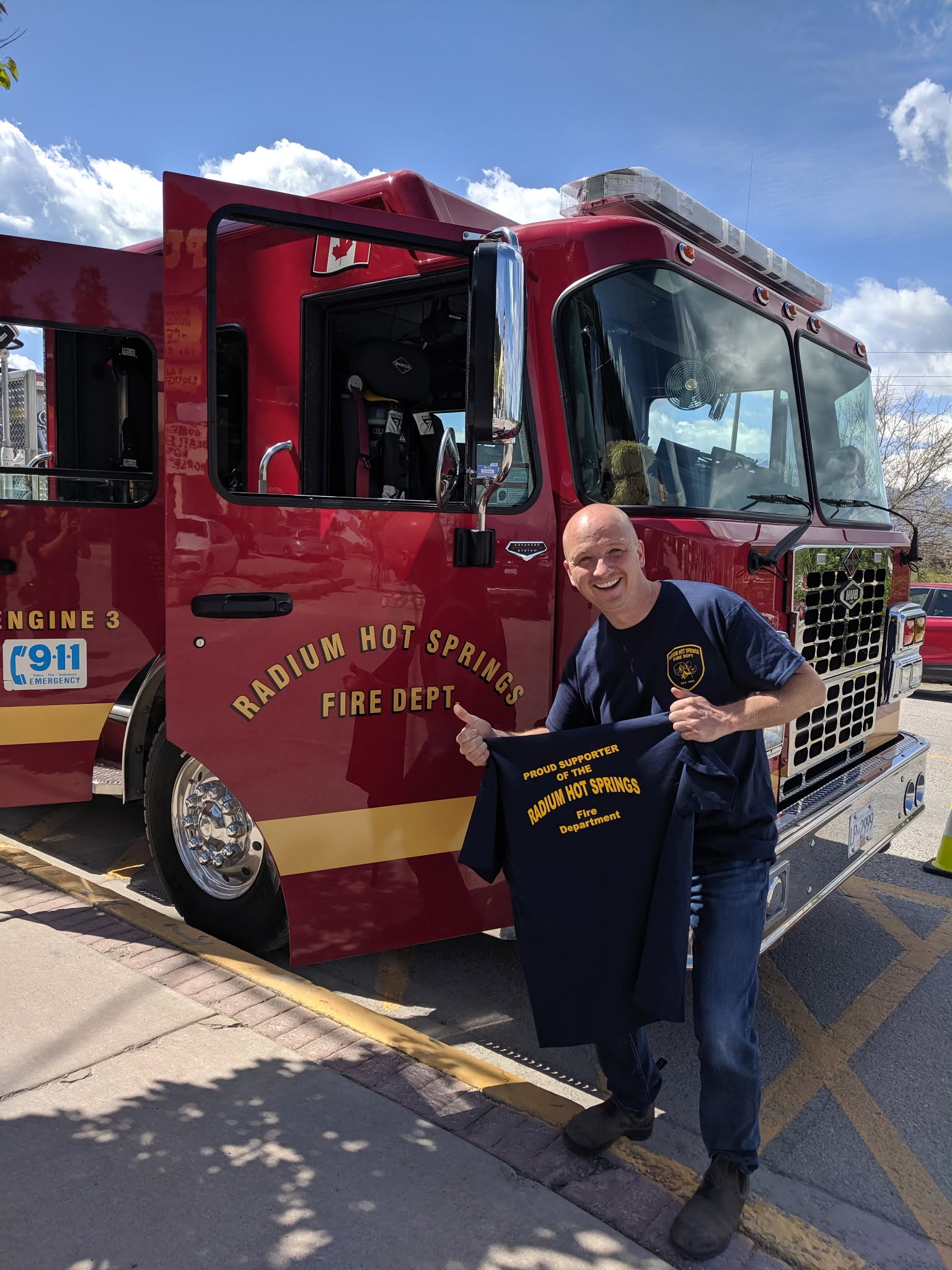
Radium's Fire Department
Radium Hot Springs Fire Department has been part of this community longer than the municipality itself. And over the years it has become about much more than putting water on fires. Our firefighters show up at community events. They host events of their own. And for a whole generation of Radium kids, Christmas Eve includes Santa and Mrs. Claus travelling around town on a fully decorated fire truck. There is also a side of their work most of us never see. Our first responders attend residents in medical distress and provide those critical first minutes of help while we wait for an ambulance. In a rural community, where BC Ambulance resources may be coming from some distance away, having trained people already here can make an enormous difference. They walk into difficult situations because somebody in our community needs help. Much of that work happens quietly, without photographs or applause. Over the past term, the department has also been entering a new chapter. The Fire Department has served the Village of Radium Hot Springs incredibly well for decades. At the same time, the Village has been intentionally integrating it more closely into our broader Protective Services structure. With a leadership transition underway, the command team has been taking stock of procedures, equipment and practices, comparing them with current standards and learning from what neighbouring departments are doing. I have enormous respect for the people who have stepped up and made that transition work. Growth does not always mean buying more things or spending more money. Sometimes it means taking an honest inventory of what you already have, learning from others, strengthening systems and helping good people do their jobs even better. And if you’ve ever thought about joining the department, they are always interested in talking to potential new members.
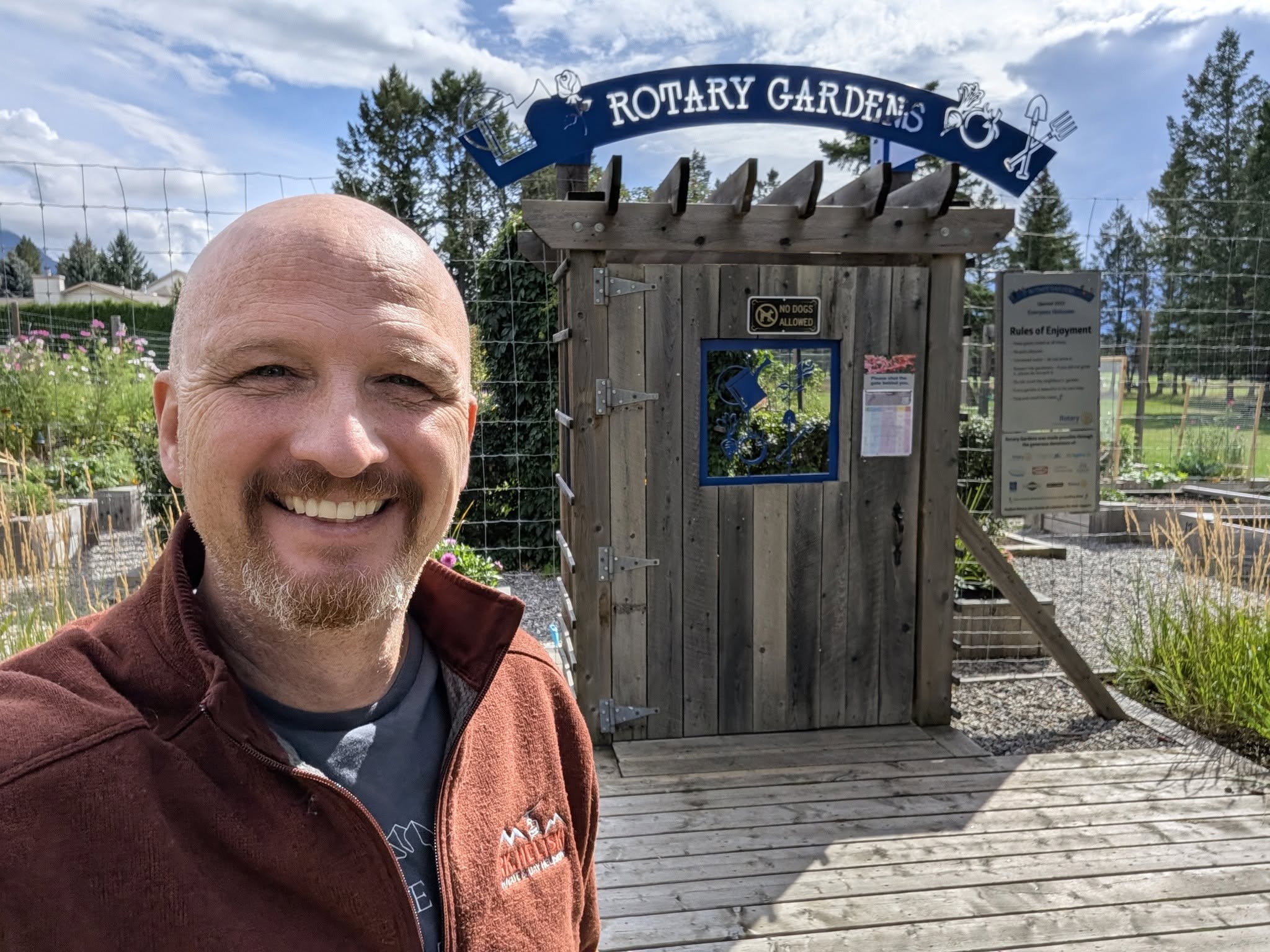
Radium's Rotary Gardens
One of the things I really value about small communities is how much gets done when the municipality and volunteer groups each do the part they are best suited to do. The Rotary Gardens - Radium Hot Springs is a great example. The Radium Hot Springs Rotary Club built the garden in 2015, and today it is managed by a volunteer committee. It includes 42 raised garden beds, communal growing space, a gazebo, picnic table, benches and other features that are open for the public to enjoy. The Village of Radium Hot Springs is able to help with some of the administration around the site. That creates a pretty good win-win-win: • residents get a beautiful public amenity • gardeners get access to plots they can care for and enjoy • Rotary and its volunteers can keep their energy focused on the project itself instead of carrying every administrative burden alone Agreements like this are part of how small towns get things done. The Village cannot take on the administration of every community project, and it should not try to. But when the fit is right, a little municipal support can help volunteers turn a good idea into something sustainable. Radium has benefited enormously from that kind of partnership over the years, and the Rotary Garden is one of my favourite examples
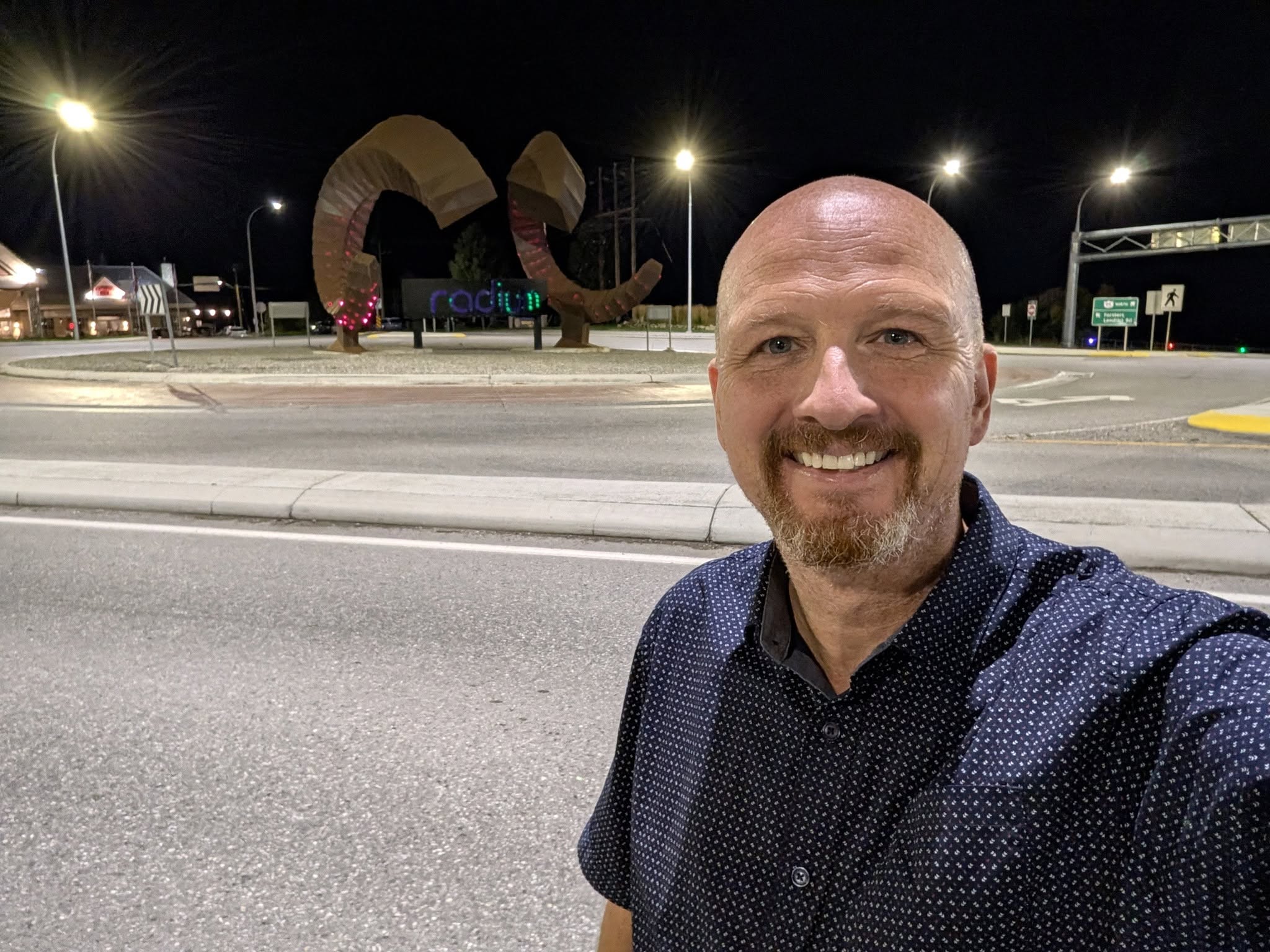
Roundabout Centrepiece
One of my favourite little Radium stories is sitting right in the middle of the roundabout. When the highway project was being designed, the centre of the roundabout needed something to break the sightline. The easy answer would have been something functional and forgettable. Instead, we asked whether it could become something that actually said Radium. The Ministry of Transportation had committed a modest amount toward a centrepiece, and we were able to combine that with Resort Municipality Initiative funding. The artwork was ultimately funded through MOTI and RMI, rather than Radium’s local residential property-tax base. We were also pretty particular about what we wanted: something unmistakably Radium, visible from every direction, interesting during the day and at night, and worth stopping for a photo. We didn’t simply take the first idea that came along. We kept working at it until we landed on the bighorns. Today they’ve become one of the most recognizable features in the Village of Radium Hot Springs. Sometimes good municipal stewardship isn’t about spending less. It’s about knowing what funding is available, using it well, and asking whether an ordinary project can become something better without sending the bill to local property taxpayers. Thanks to Tourism Radium Hot Springs for the photos.
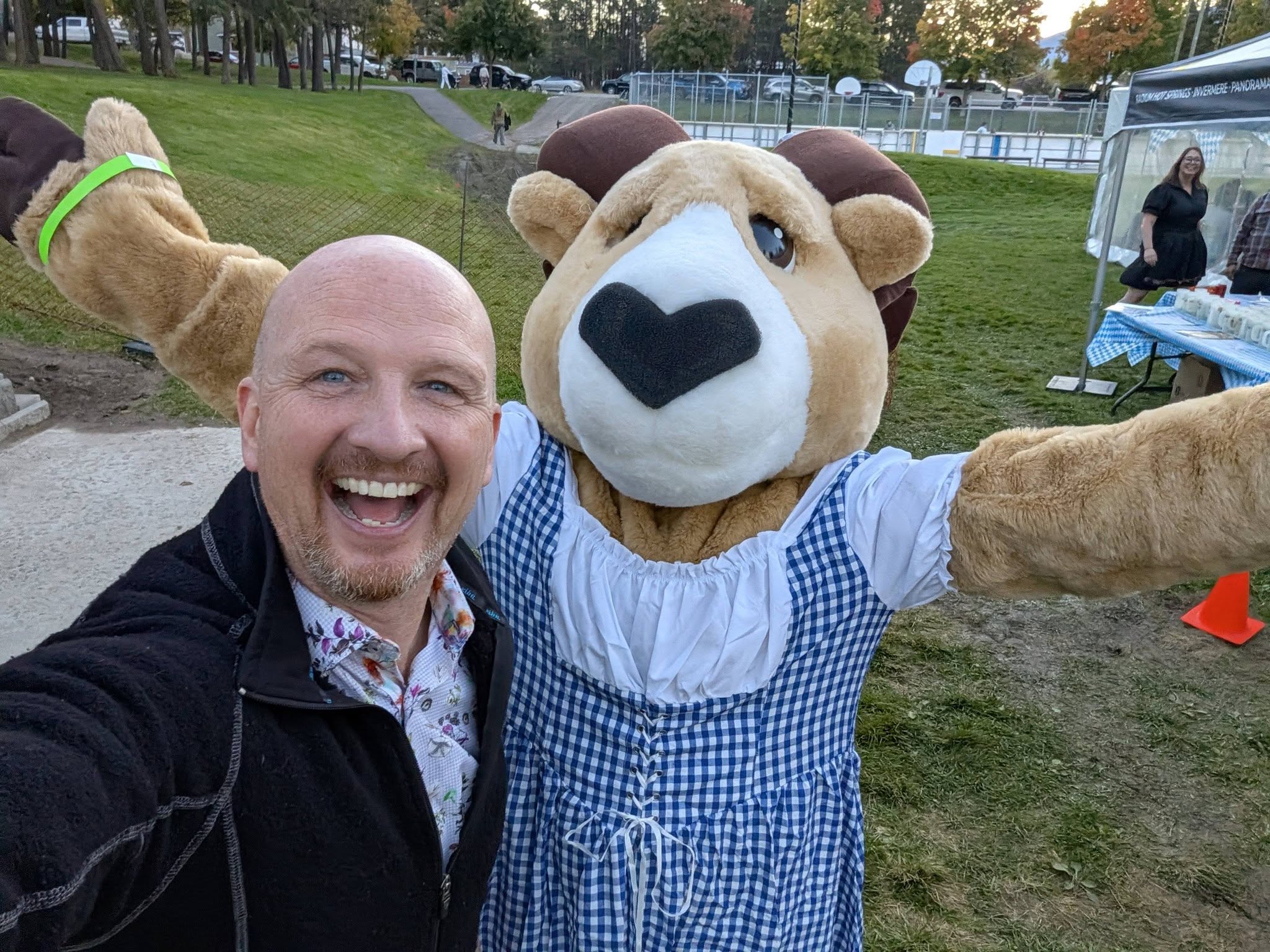
Radium's Oktoberfest
Well, I think Oktoberfest might have found a home in Radium! What a fantastic night for Radium’s first Oktoberfest! A huge thank you to Tourism Radium Hot Springs, Travel Columbia Valley and the Radium Hot Springs Rotary Club, along with all of the volunteers who stepped up to make tonight happen. For a first-time event, they absolutely knocked it out of the park. Radium has a long history of European influence, from some of our early motels to the food that has become part of our community, so Oktoberfest feels like a pretty natural fit. I especially love events like this because they work on two levels: they give locals another reason to get together and have some fun, while also giving visitors another reason to come experience Radium. Everybody wins. Great crowd, great music, great food and a whole lot of lederhosen. Prost to year one!